Lindsey Wilson University Celebrates 175 Years of 'Moby-Dick'
To commemorate Herman Melville's classic work, LWU English Department and English honor society transform Cralle Student Union Building into legendary Spouter-Inn.
COLUMBIA, Ky. (11/13/2026) — For a few hours on Thursday, Nov. 12, part of Lindsey Wilson University's Cralle Student Union Building was transformed into a mid-19th century New England whaling-town tavern, where whalers, harpooners and sailors gathered in between nautical adventures.
Part of the Cralle SUB was decorated to resemble the fictional Spouter-Inn in celebration of 175 years of Herman Melville's classic 1851 novel, "Moby-Dick; or, The Whale." The Spouter-Inn is the setting where Ishmael, the novel's narrator, seeks shelter after he arrives in New Bedford, Massachusetts, in Chapter 3.
"Moby-Dick" reached American readers on Nov. 14, 1851. To celebrate the novel's release and its cultural impact, the LWU English Department and the university's chapter of Sigma Tau Delta, the international honor society for English majors, threw a party. In addition to decorating part of the Cralle SUB, guests were offered nautical-themed food, snacks and drinks, along with activities and a complimentary copy of the novel.
Even the weather cooperated, providing a "damp, drizzly November" for patrons to celebrate the literary masterpiece. Guests also took turns reading excerpts of the novel from the Cralle SUB stage.
From failure to classic
Although Thursday was a celebration of what's considered to be one of the greatest American novels, LWU English faculty member Kendall Sewell pointed out that "Moby-Dick" was not an instant literary success. In fact, it took the novel about a century to catch on and take its place in the American literary cannon.
"It sold poorly, puzzled its reviewers and was nearly forgotten when Melville died" in 1891, said Sewell, who wore a cranberry-colored cap with the image of a whale and the words "Call me Ishmael," the novel's opening line.
But when critics and scholars took another look at "Moby-Dick" in 1951, they started to see Melville's literary genius from a different perspective.
"It was the 100-year anniversary when scholars rediscovered it and started talking about it," said Sewell, who is teaching the novel in his "American Literature I" survey class. "It really caught on from there, and it became a real phenomenon. People looked back and realized it was a prescient novel that was thinking about the American condition."
Sewell, who graduated from Lindsey Wilson in 2013, first experienced "Moby-Dick" in "American Literature I," which was taught by legendary Lindsey Wilson English professor the late Mark Dunphy.
"He said he read it not once a year but once a season," said Sewell. "I wanted to know what it was about this book that made a man want to read it not just once a year but four times a year."
Building interest
That deep level of devotion to the novel is what has student Kaydence Karnes '29 looking forward to studying it in Sewell's class.
"I hope to see what draws everyone into it," said Karnes, who is an English secondary education major from Columbia who helped decorate the Cralle SUB and serve treats to the guests of the temporary tavern. "A lot of people absolutely love this book, so I want to see what draws them into it."
Student Sophie Willen '30 read "Moby-Dick" about a year ago. While she found some sections of the novel to be a bit slow moving, she said "there are parts of it that are going to stick with me for the rest of my life."
"It's a really impressive literary narrative," said Willen, who is a communication major from Lexington, Kentucky.
As Sewell observed, one reason "Moby-Dick" was not well received by many readers of the 1850s was because "people didn't understand it."
"It contained so much, and in many ways I think it is a preview of where the nation was going -- but where wasn't yet -- in terms of race, science and politics," said Sewell. "Melville asks so many questions that were percolating but most literary critics were not asking those questions."
For Willen, one of the novel's great lessons comes from how the crew of the fictional Pequod whaling ship, under the tyrannical Captain Ahab, recklessly pursues the fictional famous male albino sperm whale Moby Dick.
"I think one of the lessons to learn is to know when to give up," said Willen "They chase their dream until it literally breaks their ship apart. I think it's important to know which dreams are within your reach."
Lindsey Wilson University is a vibrant liberal arts university in Columbia, Kentucky. Founded in 1903 and affiliated with The United Methodist Church, the mission of Lindsey Wilson is to serve the educational needs of students by providing a living-learning environment within an atmosphere of active caring and Christian concern where every student, every day, learns and grows and feels like a real human being. Lindsey Wilson offers 30 undergraduate majors, six graduate programs and a doctoral program. The university's 29 intercollegiate varsity athletic teams have won more than 120 team and individual national championships.
Media Attachments
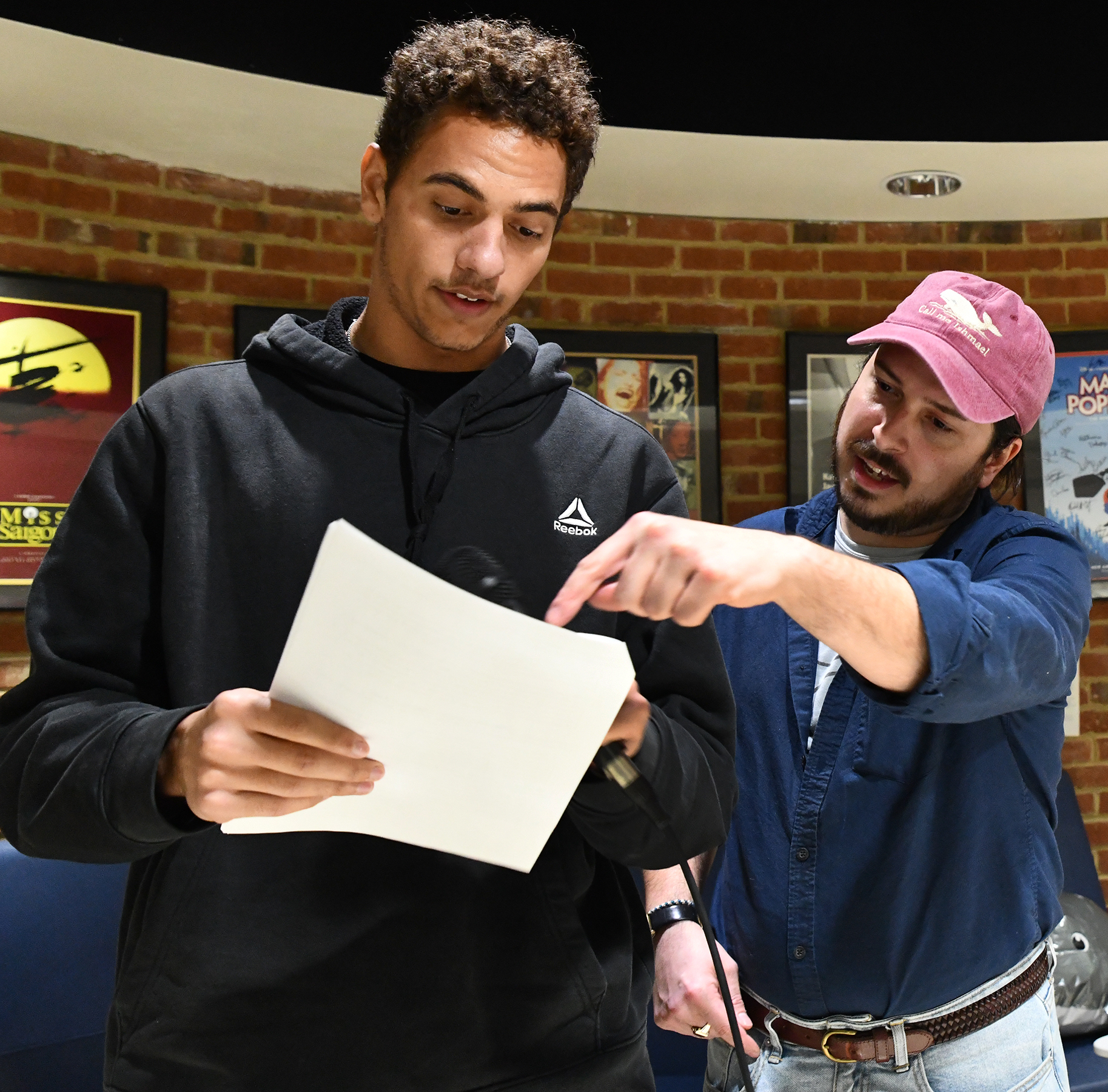
Lindsey Wilson University English faculty member Kendell Sewell ’13, right, points out a selection from Herman Melville’s “Moby-Dick; or, The Whale” for student Aiden Eastridge ’29 of Campbellsville, Kentucky, to read during a celebration of the novel’s 175th anniversary on Thursday, Nov. 12, in the university’s Cralle Student Union Building. The literary celebration was sponsored by the Lindsey Wilson English Department and the university’s chapter of Sigma Tau Delta, the international honor society for English majors.