Appalachian Cryptids to be Explored, Explained and (Maybe) Exhibited at Oct. 21 Lindsey Wilson University 'SnackChat'
English professor Harold Bosstick to discuss animals and creatures that have appeared in and haunted the region.
COLUMBIA, Ky. (10/13/2026) — Creatures that go bump in the night as well as in the woods will be the topic of the next "SnackChat" at Lindsey Wilson University.
English professor Harold Bosstick will help audience members get into the spirit of Halloween when he discusses Appalachian cryptids at 2 p.m. CT on Wednesday, Oct. 21, in the Thomas D. Clark Reading Room of the Katie Murrell A. Library.
"SnackChat" is free and open to the public, and it will include light snacks and refreshments.
Cryptids are animals or creatures that people believe exist, even if their existence has not been proven or documented by scientists. Some better known cryptids are Bigfoot, who has reported to have wandered into Southcentral Kentucky; the Kentucky Dogman, also known as the Beast of the Land Between the Lakes; and the wicked half-goat, half-man Pope Lick Monster, also known as the Louisville Goatman.
During his Oct. 21 presentation, Bosstick will discuss lesser known cryptids, including the Flatwoods humanoid of West Virginia, the extraterrestrial Hopkinsville goblins of 1955 -- also known as the Kelly Green Men Case -- and the hideous but innocuous squonk of Pennsylvania and the Pocono Mountains.
The truth is out there
Bosstick specialized in studying folklore when he worked on his doctorate in English, the product of a lifelong fascination with monsters and extraterrestrial creatures, dating to the seminal 1990s American science fiction television show "The X-Files."
"I always joke that I was exposed to 'The X-Files' way younger than I should have," said Bosstick, who earned a doctorate in English from the University of Louisiana. "So it's been one of those things I've studied since a young age. I love talking about monsters, I love horror movies, and I love folklore that deals with cryptids."
Whether the monsters and creatures are in fact real is often beside the point, because the fact that some people choose to believe in them can be revealing about a local culture and its way of life.
"We may or may not believe in them, but we still tell stories about them," said Bosstick. "And when we tell those stories, we're not just sharing what happened and the narrative of what a monster did, but we're sharing something about ourselves.
"That's what I've always found so fascinating about monsters is how much we tell about ourselves when we talk about monsters."
The creature known as Bigfoot, who has reported to have been seen a couple of times in Southcentral Kentucky when it wandered from its reported home territory in the Pacific Northwest, is a good example, according to Bosstick.
"Why do we want to tell a story about a giant hairy beast out in the middle of the woods?" he asked. "Partly, it's because sometimes we're afraid of the woods or what's in them."
Myths and legends of cryptids have proliferated in the Appalachian region, in part, because of the region's wild landscape.
"I think some of those stories took hold in Appalachia because of just how untamed and wild this place was when settlers first came here," he said.
Bosstick said that scholars have surmised that some people continue to talk about monsters today "not just because we're afraid of them, but because we use monsters to set up boundaries between ourselves and what is out there away from us."
"We also use monsters to express a kind of desire about things that are out there that we find interesting and want to know more about," he said.
Lindsey Wilson University is a vibrant liberal arts university in Columbia, Kentucky. Founded in 1903 and affiliated with The United Methodist Church, the mission of Lindsey Wilson is to serve the educational needs of students by providing a living-learning environment within an atmosphere of active caring and Christian concern where every student, every day, learns and grows and feels like a real human being. Lindsey Wilson offers 30 undergraduate majors, five graduate programs and a doctoral program. The university's 29 intercollegiate varsity athletic teams have won more than 120 team and individual national championships.
Media Attachments
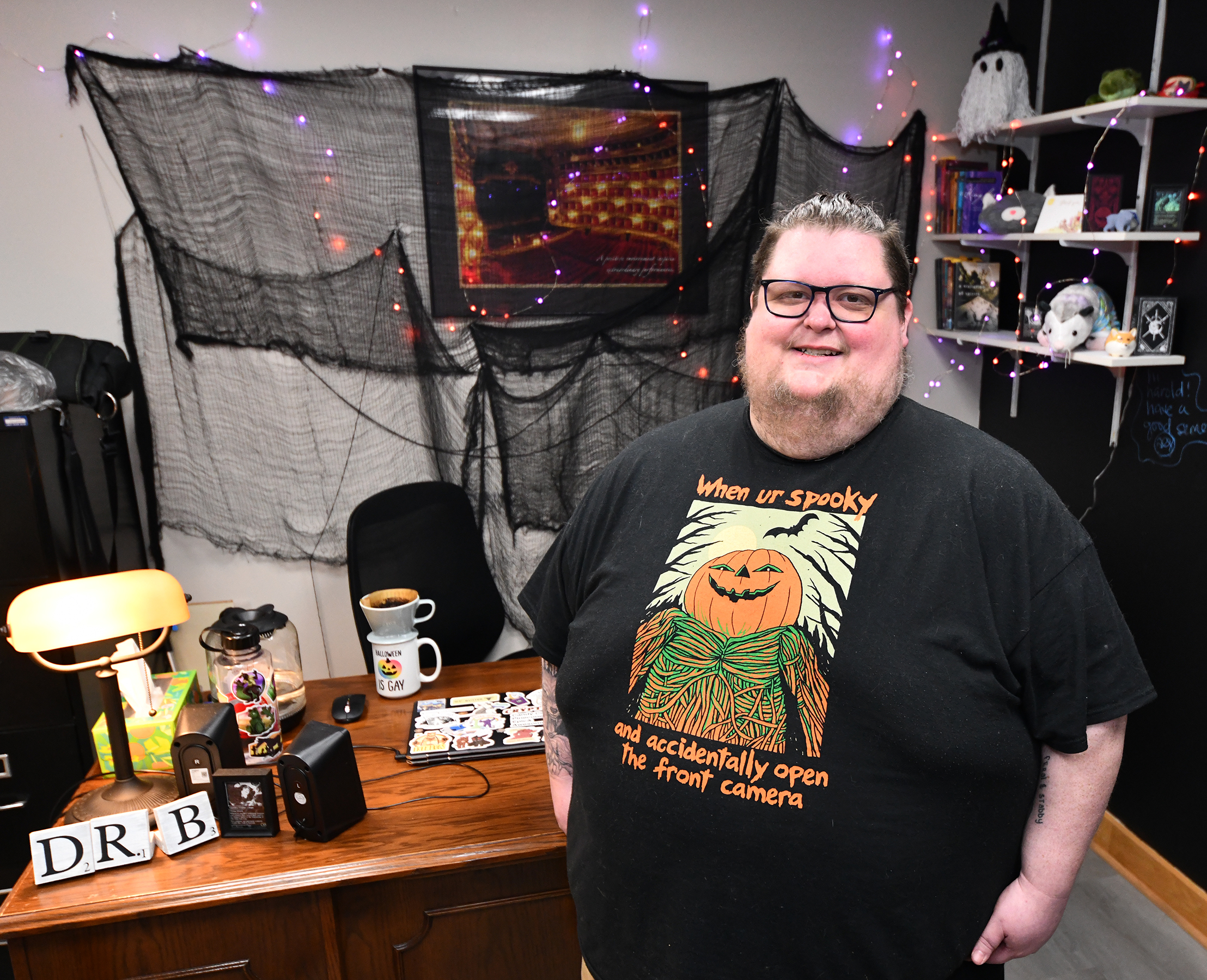
Lindsey Wilson University English professor Harold Bosstick will examine Appalachian cryptids during his “SnackChat” talk at 2 p.m. CT on Wednesday, Oct. 21, in the Thomas D. Clark Reading Room of the Katie A. Murrell Library. It is free and open to the public.

Lindsey Wilson University
Duane Bonifer -- 270-384-8042 (office), 270-634-1101 (mobile)Share this Story


Recent News
- Lindsey Wilson University 'Safe Halloween' to be Held Oct. 30
- Lindsey Wilson University Director of Financial Aid Audrey Price to Appear on KET's 'Education Matters'
- Lindsey Wilson University Students Mix Klimt with Matisse to Create Public Art Installation
- Lindsey Wilson University's Davontaye Saunders Sets Touchdown Record, but Blue Raiders Fall to Georgetown in Overtime
- Lindsey Wilson University English Class Learns Importance of Community Connections at Adair County Public Library
- Resourceful Lindsey Wilson University Students Find Multiple Ways to Enjoy 'Couch Night' and a Pair of Blue Raider Soccer Wins over Campbellsville University
- Celebrating 64 Years of Love
- Pre-Law Society Helps Lindsey Wilson University Students Chart Path to Law School
- Battle of Highway 55 Trophy Returns to Lindsey Wilson University as Blue Raiders Beat Campbellsville 30-21
- Lindsey Wilson University Welcomes Record Number of Students into Nursing Program