Lindsey Wilson University Community Celebrates the Constitution with Panel Discussion, Ringing of Alumni Victory Bell
'The ambiguity of the Constitution is its perhaps most beautiful characteristic.'
COLUMBIA, Ky. (09/18/2026) — On the 239th birthday of the U.S. Constitution, one of the secrets of the oldest government blueprint's longevity is its ability to be flexible.
That was one of the observations made by three Lindsey Wilson University professors during an afternoon roundtable discussion about the Constitution on Thursday, Sept. 17, in the Thomas D. Clark Reading Room of the Katie A. Murrell Library.
The discussion about the Constitution was part of a day celebrating America's living document at Lindsey Wilson, which included a bell-ringing ceremony at the Alumni Victory Bell. The events were sponsored by the Lindsey Wilson History Club in partnership with the Jane Lampton Chapter of the Daughters of the American Revolution in Columbia.
"The ambiguity of the Constitution is its perhaps most beautiful characteristic because it is through that ambiguity we are able to keep it alive and make it relevant to the time we live in," said criminal justice professor Casey McGowan '14.
Officially designated Constitution Day and Citizenship Day by the federal government since 2004, Sept. 17 is a federal observance that recognizes the adoption of the Constitution and those who have become U.S. citizens -- the day the Constitution was signed in 1787 by 39 delegates at the Constitutional Convention in Philadelphia. The document was ratified by the states the following year, and it took effect in 1789.
Joining McGowan during the roundtable discussion were political science professor Matthew Powers and history professor Lucas Somers, who hosted the conversation. While the three professors represented different academic disciplines, they found much to agree on when it came to the Constitution.
For example, they all pointed to the 14th Amendment -- ratified in 1868 and guaranteeing citizenship, equal protection under the law and due process for all Americans -- as one of the most consequential additions to the Constitution.
"It defines who the people are and what rights the people have," said Somers.
'The rulebook'
Drawing a contrast between the Declaration of Independence, which turned 250 last July, and the Constitution, McGowan said, "I see the Declaration as the goal, what we are fighting for and then the Constitution more as the structural mechanism of how we're going to actually put those lofty goals into practice."
Or, as Powers said: "The Constitution is the rulebook of how the game is supposed to be played."
During its 239 years, a total of 11,985 amendments to the Constitution have been proposed, with only 27 being adopted. Although even that success figure is a bit misleading because the Constitution has been changed only 18 times, and one of those changes voided another one -- the Bill of Rights, the first 10 amendments, were passed together, and the 21st Amendment repealed the 18th Amendment, which had ushered in Prohibition.
"I don't think that the aliveness of the Constitution rests in its ability to be amended, but rather its ability to be interpreted," said McGowan. "We wouldn't want a system where we could amend the Constitution easily."
Powers said what had helped make the Constitution "malleable enough to survive this long" are informal means that have been used to expand legal understandings of the document.
"The change comes from the judicial precedents, evolving societal understandings and interpretations," he said.
Although efforts to modify or change the Constitution might be difficult, McGowan said that she reminds her students that the document's power ultimately resides in the people who created it.
"The most important thing I want them to take from the class is the concept in the Constitution that the government has power only because we say that it has power," she said. "The power is to the people, and so to me that is the most impactful thing about the document."
Lindsey Wilson University is a vibrant liberal arts university in Columbia, Kentucky. Founded in 1903 and affiliated with The United Methodist Church, the mission of Lindsey Wilson is to serve the educational needs of students by providing a living-learning environment within an atmosphere of active caring and Christian concern where every student, every day, learns and grows and feels like a real human being. Lindsey Wilson offers 30 undergraduate majors, five graduate programs and a doctoral program. The university's 29 intercollegiate varsity athletic teams have won more than 120 team and individual national championships.
Media Attachments
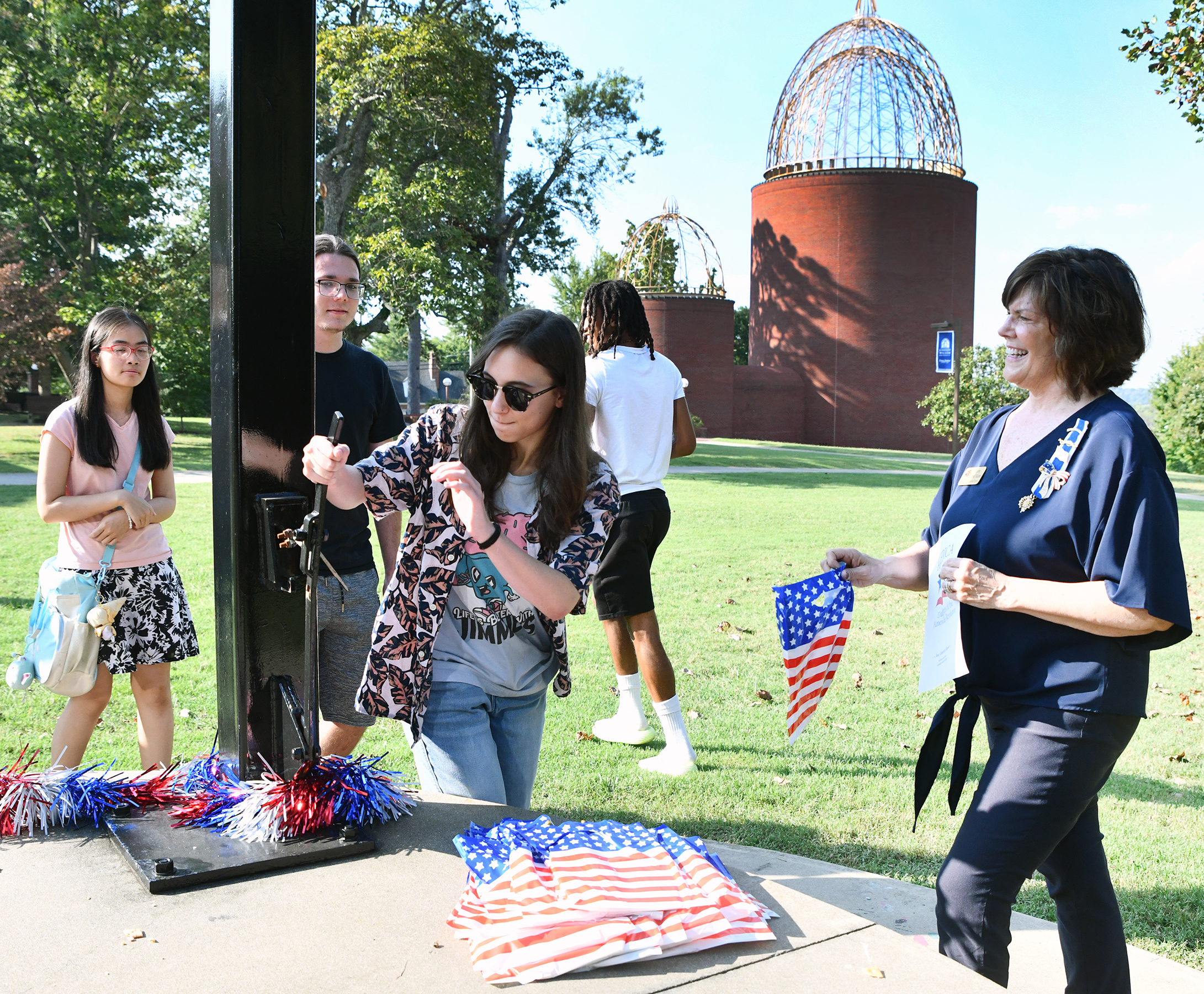
Lindsey Wilson University student Alannah Bowman ’27 of Columbia rings the Alumni Victory Bell on Thursday, Sept. 17, to celebrate Constitution Day. Looking on is Valerie Adams ’90 of the Jane Lampton Chapter of the Daughters of the American Revolution in Columbia. The Daughters of the American Revolution gave every Lindsey Wilson student who rang the Alumni Victory Bell a Constitution swag bag.
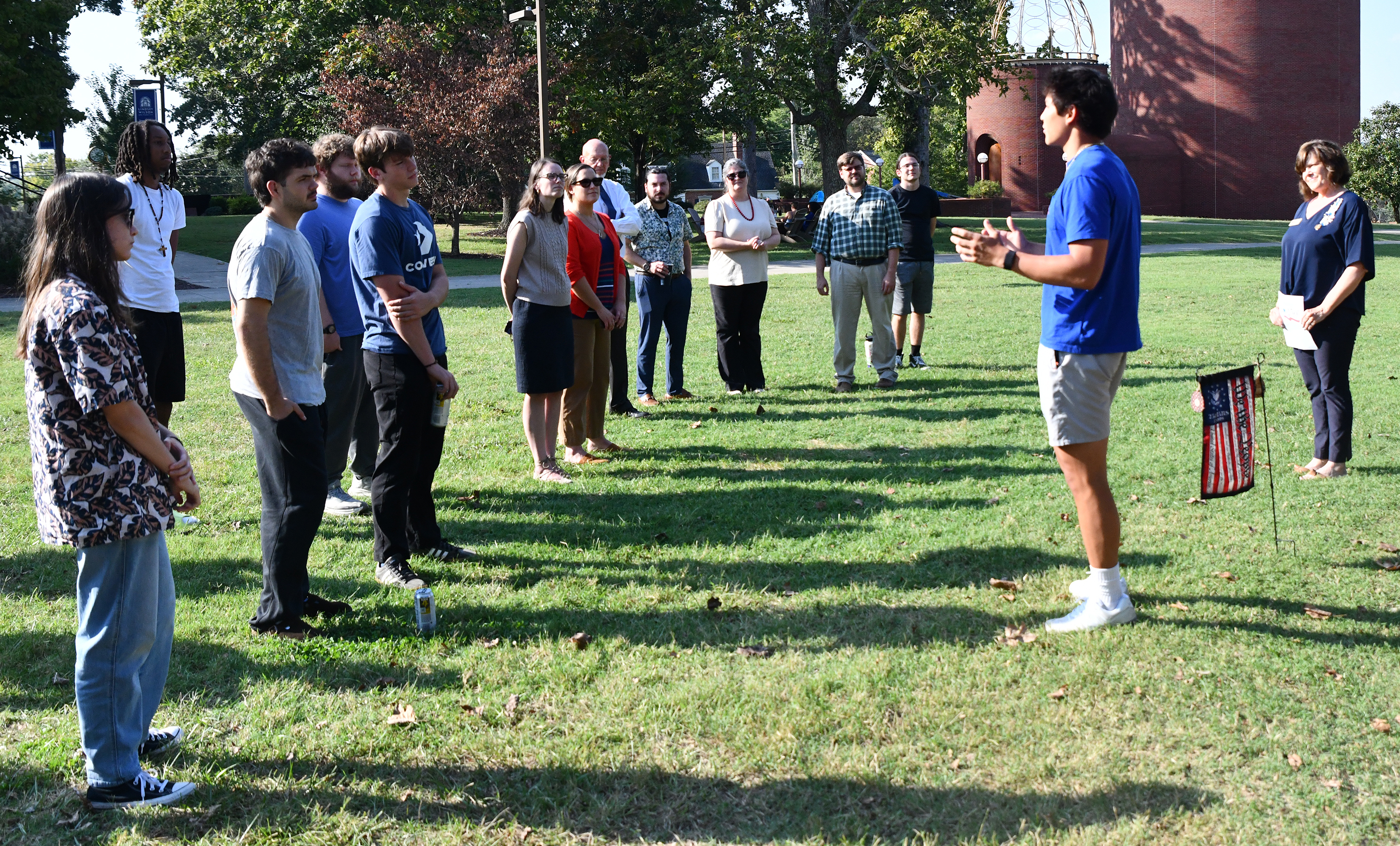
Lindsey Wilson University Student Government Association President Luke Popplewell ’29 of Russell Springs, Kentucky, addresses Lindsey Wilson students, faculty and staff in front of the Alumni Victory Bell on Thursday, Sept. 17, as part of the university’s Constitution Day celebration. Looking on is Valerie Adams ’90 of the Jane Lampton Chapter of the Daughters of the American Revolution in Columbia.
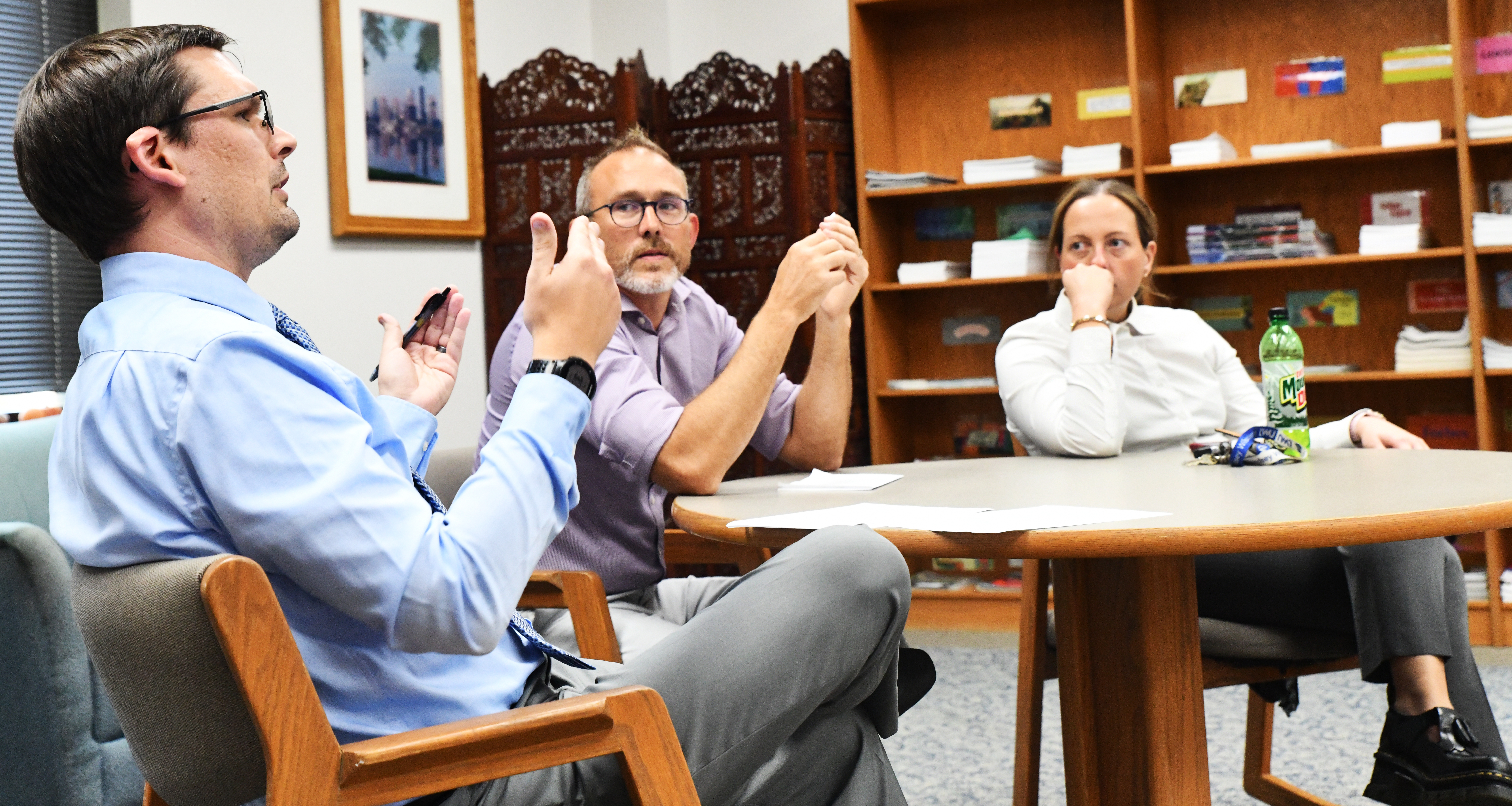
Lindsey Wilson University professors, from left, Lucas Somers of history, Matthew Powers of political science and Casey McGowan ’14 of criminal justice engage in a roundtable discussion about the U.S. Constitution on Thursday, Sept. 17, in the Thomas D. Clark Reading Room of the Katie A. Murrell Library. The discussion was part of the university’s celebration of Constitution Day.

Lindsey Wilson University criminal justice professor Casey McGowan ’14 makes a point during a roundtable discussion about the U.S. Constitution on Thursday, Sept. 17, in the Thomas D. Clark Reading Room of the Katie A. Murrell Library. The other two professors who took part in the roundtable discussion are, left, Matthew Powers of political science, and Lucas Somers of history. The discussion was part of the university’s celebration of Constitution Day.
Lindsey Wilson University
Duane Bonifer -- 270-384-8042 (office), 270-634-1101 (mobile)Share this Story


Recent News
- More than 2,500 Donors Go 'All In' for Lindsey Wilson University, Give $874,211
- Lindsey Wilson University Malvina Farkle Day Energizes Campus
- Lindsey Wilson University Takes Part in National Voter Registration Day
- Lindsey Wilson University Singers Welcome New Members into their Musical Family
- Lindsey Wilson University to Celebrate Constitution Day on Sept. 17
- Lindsey Wilson University International Students Connect with Region through Host Families
- VFW Post 6097 Creates Endowed Scholarship at Lindsey Wilson University
- Lindsey Wilson University Students Help Campus Remember 9/11
- Malvina Farkle Day 2026 T-shirt Celebrates Lindsey Wilson University
- Adair, Green and Taylor County Economies Big Winners at Lindsey Wilson University MTB Showdown